
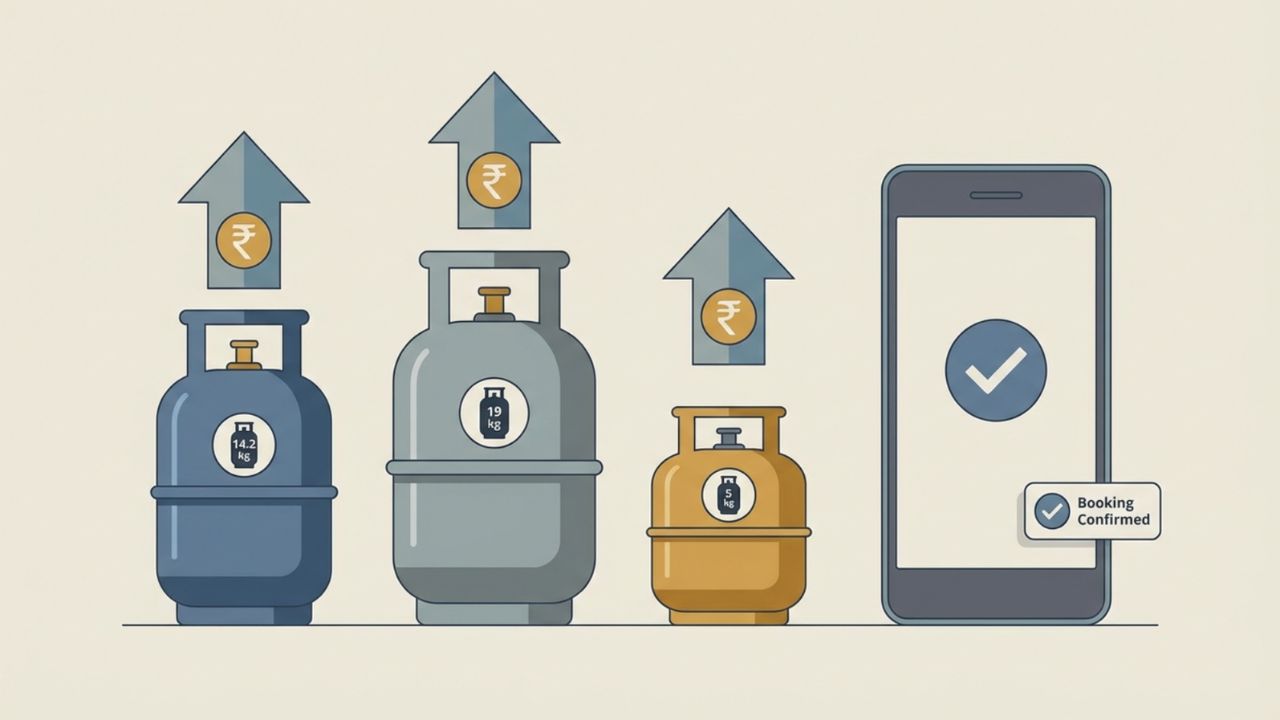
April 2026 has brought a mix of clarity and confusion for LPG users across India. While many people expected major rule changes, the reality is more practical: prices have shifted for some cylinder categories, booking rules remain the same, and Aadhaar verification requirements have been clarified by the government.
For households, the biggest relief is that domestic LPG cylinder prices have largely remained stable. However, commercial users and small-cylinder users are already feeling the impact of rising costs. At the same time, misinformation around refill booking rules and eKYC has made it important for consumers to understand what actually applies this month.
Table of Contents
Price Update: What Has Changed This Month
The most noticeable change in April 2026 is the price movement across different LPG categories.
Domestic 14.2 kg cylinders, which are used by most households, have not seen a price hike in major metro cities. This stability provides some relief to families already managing rising living costs.
However, commercial LPG cylinders (19 kg), widely used by restaurants, hotels, and small businesses, have become more expensive. This increase is expected to affect food prices and operating costs in many sectors.
At the same time, smaller 5 kg cylinders have also become costlier in several regions. These cylinders are commonly used by low-consumption households and temporary users, meaning the impact may be felt by more price-sensitive groups.
Booking Rules: No Change Despite Viral Claims
One of the most important clarifications this month is about refill booking rules.
There has been no change in the official refill gap policy. The existing rule continues to apply:
- Urban areas: Minimum 25 days between refills
- Rural areas: Minimum 45 days between refills
This rule applies broadly to domestic LPG users, and reports suggesting new timelines or category-based changes were incorrect.
If a booking request is rejected or delayed, the most likely reason is that the minimum refill gap has not yet been completed. Consumers are advised to check the last delivery date before attempting a new booking.
Aadhaar eKYC Rule: Who Needs to Complete It
Another area where confusion spread widely is Aadhaar-based eKYC.
The government has clearly stated that not all LPG users need to complete eKYC again. The rule is more limited:
- Only customers who have not completed eKYC earlier need to do it
- Regular users who already verified their details do not need to repeat the process
- PMUY beneficiaries need to complete eKYC once per financial year, mainly for subsidy-related tracking
Importantly, LPG supply is not stopped immediately if eKYC is pending. Consumers can complete the process from home or through authorized agents without paying any fee.
Impact on Different LPG Users
Household Users (14.2 kg)
For most households, April is relatively stable. Prices remain unchanged in major cities, and there are no new booking restrictions. The focus for users should be on proper booking timing and delivery verification.
Commercial Users (19 kg)
Businesses are facing higher costs due to the price increase. Restaurants and food vendors may see margins shrink or may pass on costs to customers. This category is the most affected in April.
Small Cylinder Users (5 kg & 10 kg)
Smaller cylinders have become costlier, especially the 5 kg category. These are often used by migrant workers, small households, and temporary setups, so the impact may be more visible among lower-consumption users.
The 10 kg composite cylinders continue to gain popularity due to their lighter weight and convenience, although no major rule change has been announced for them.
Growing Push Toward PNG Connections
A broader trend shaping LPG usage is the increasing push toward piped natural gas (PNG).
In cities where PNG infrastructure is already available, authorities are encouraging households and commercial users to switch from LPG cylinders. Over time, this may influence LPG availability and policy decisions in such areas.
For users living in PNG-covered zones, it is advisable to check with local distributors about future supply conditions and transition timelines.
Key Things Consumers Should Check Before Booking
Before placing a refill order in April 2026, consumers should keep a few practical points in mind:
- Confirm that the minimum refill gap has been completed
- Check the latest cylinder price in their area
- Keep the registered mobile number active for OTP verification
- Verify whether eKYC is actually pending
- Check if PNG availability in the area may affect future LPG supply
These simple checks can prevent delays, confusion, and unnecessary repeat bookings.
Final Understanding
April 2026 is not about drastic LPG rule changes but about clarity and awareness. Domestic users are seeing price stability, while commercial and small-cylinder users are facing higher costs. Booking rules remain unchanged, and Aadhaar eKYC requirements are limited to specific cases.
For most consumers, staying informed and avoiding misinformation will be the key to smooth LPG usage this month.